
Tied in a column
Those who didn’t meet the target were often tied to a column at the tunnels’ exit and left there tied all night or day until the end of the shift. The torture was severely more excruciating during extreme frosts.
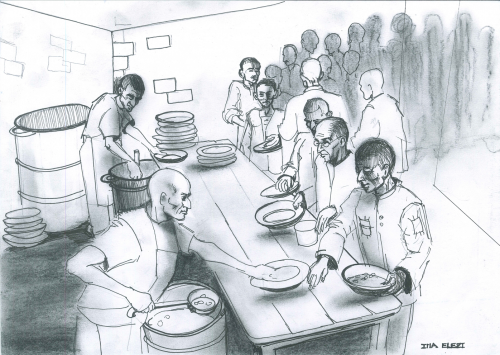
This is a view of the prisoners’ cafeteria in the ‘70s.After performing their morning routine in the toilet, prisoners who started first shift would hurry to the cafeteria to have breakfast and go to work. At 6:00 am, all prisoners who’d work first shift had to have finished their breakfast and be ready to go to the tunnels.For the first shift that worked in the mines, breakfast was soup with seasonal vegetables and sometimes a little meat.But this menu did not apply to those working above ground or in supporting sectors, as they had a poorer diet and they never had meat.
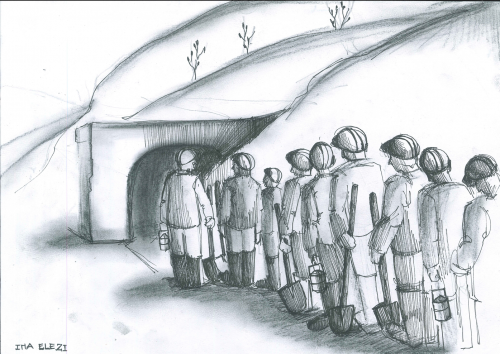
The tunnels’ entrance had small barracks with boards and sheet metal, which stored the prisoner’s working tools such as: axes, pickaxes, shovels, hammer drills, mining drills (hexagonal section rods of different lengths from 50 to 150 cm placed in the hammer and drilling holes where the explosive device would be put).Before entering the mine, the prisoners would be divided in groups of three, where one was a miner and two were carters.After taking their work tools, they would enter the tunnel and go to the exploded area to start work.
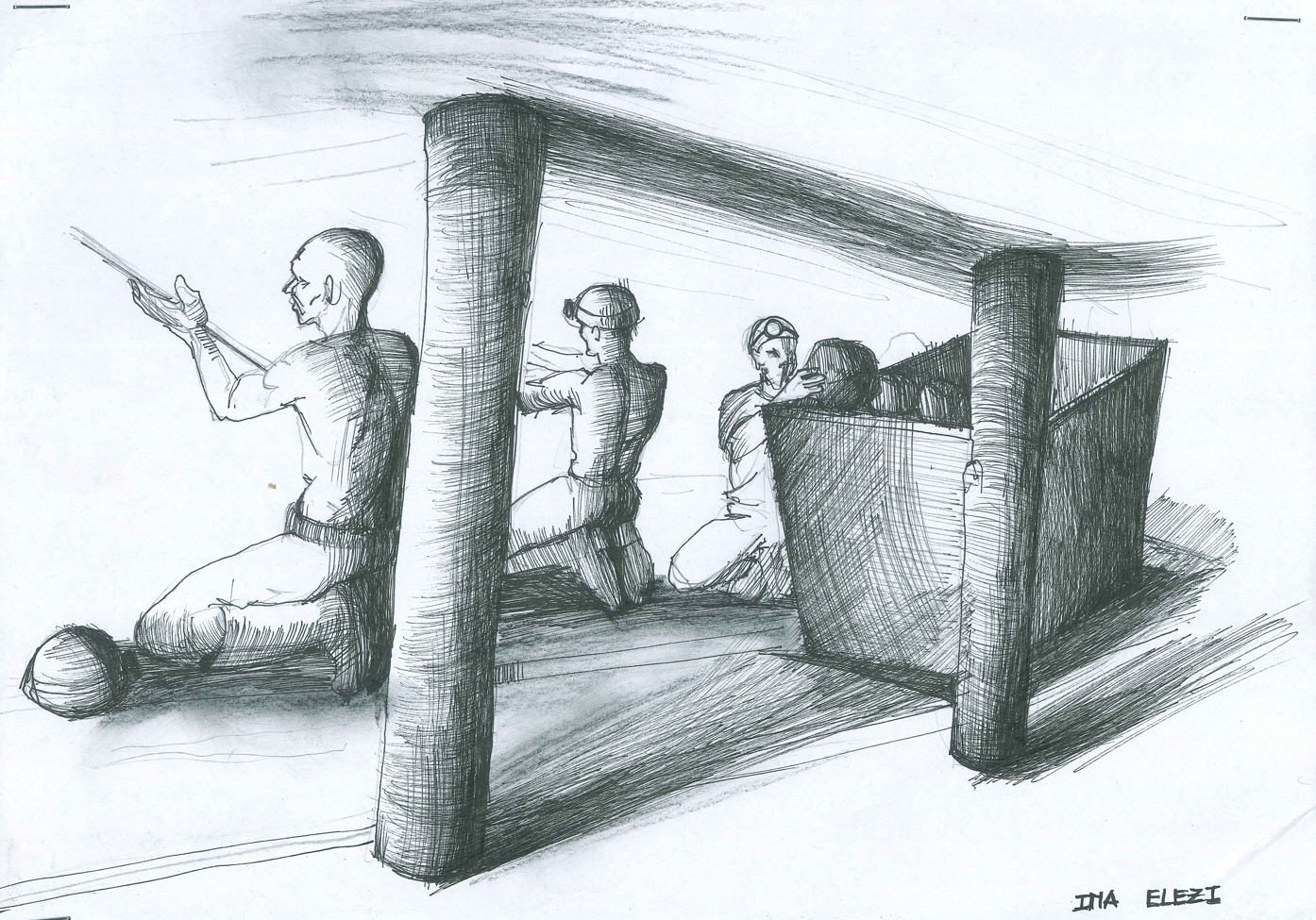
Whereas the two carters continued the reinforcement process, the miner hammered holes to put the explosive in and then detonate it after exiting the mine. All of the rocky mass exploded by the dynamite would be the new work front for the successive shift. The second shift would follow the same routine as the first and then leave the area for the third.
Based on rare images that managed to film the area after the fall of the dictatorship at the beginning of the ‘90s, Spaç Camp looked like this. The last political prisoners left the camp in June 1990.
After ending eight hours of forced labor, prisoners delivered their work tools and got ready to start their downwards walk to the camp entrance. At the camp entrance, all prisoners went through a daily check by guards as the latter feared that prisoners could be holding tools they took out of the tunnels to return in hiding to the camp. Another check was done if all prisoners were present or not, as it often happened during shift hours that prisoners who entered the tunnel would be able to find hidden exits and leave the camp’s enclosure and escape. Around two hours after finishing their shift and checks, prisoners went to the cafeteria to eat lunch and after exactly one hour go through roll call. Later, the command had free time to fill mainly through obligatory readings of the regime’s party propaganda. Afterwards there was dinner and at around nine in the evening, sleeping time started for the first shift.
Those who didn’t meet the target were often tied to a column at the tunnels’ exit and left there tied all night or day until the end of the shift. The torture was severely more excruciating during extreme frosts.